Review: Periphery – A Pale White Dot
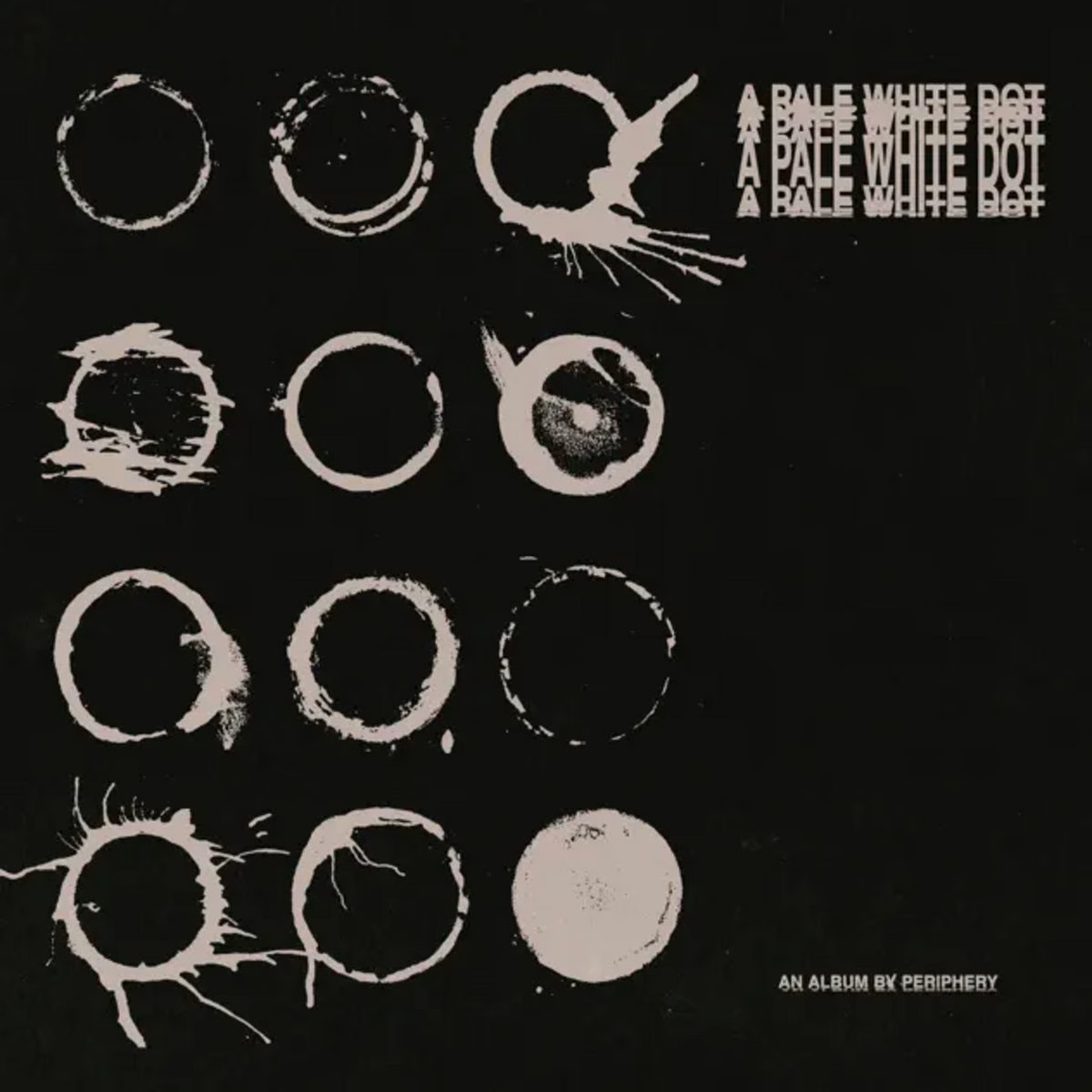
Periphery’s “A Pale White Dot” is a study in contrasts. It a record that feels both familiar and foreign and in the end a bold step sideways rather than forward. The band, long synonymous with sprawling, hyper-technical progressive metal, distills their sound into something more concise, more immediate and in the end at the expense of the very complexity that defined them. Yet, what they sacrifice in intricacy, they often gain in accessibility and emotional directness. The album’s brevity, clocking in under 48 minutes, is a statement in itself, a rejection of the sprawling runtime that sometimes dragged down their earlier works.
Songs like “Obsession” and “Malevolent” still deliver the crushing riffs and polyrhythmic groove that is to expect from the band, but the songs tighter, more focused, as if Periphery have finally decided to limit themselves; or rather focus themselves.
The most striking evolution, however, is the embrace of electronic and alternative elements, particularly in songs like “Blackwall,” which flirts with synthwave in a way that feels both unexpected and refreshingly modern. The vocals remain a strong point, soaring with melodic precision one moment and snarling with raw aggression the next, though the increased emphasis on clean, radio-friendly choruses occasionally borders on the generic. It’s here that “A Pale White Dot “stumbles slightly, when the band leans too hard into their newfound pop sensibilities to be precise. The result can feel a touch sanitized, lacking the raw, unfiltered energy that made their earlier work so compelling.
Yet, for all its occasional missteps, the album is undeniably cohesive. The production is pristine and the songwriting, while not always adventurous, is undeniably effective. The shorter runtime ensures that there’s little fat to trim, and the pacing, though at times uneven, keeps the listener engaged.
It’s not the Periphery of old, but it’s a Periphery that’s unafraid to experiment, to strip back, to explore new territory. And if the trade-off is a loss of some of the progressive ambition that once set them apart, the gain is a record that’s easier to digest and easier to return to. It’s not their best, but it’s far from their worst, and in a discography as consistently strong as theirs, that’s high praise indeed.