Review: When The Leaves Fall, I’ll Be Near
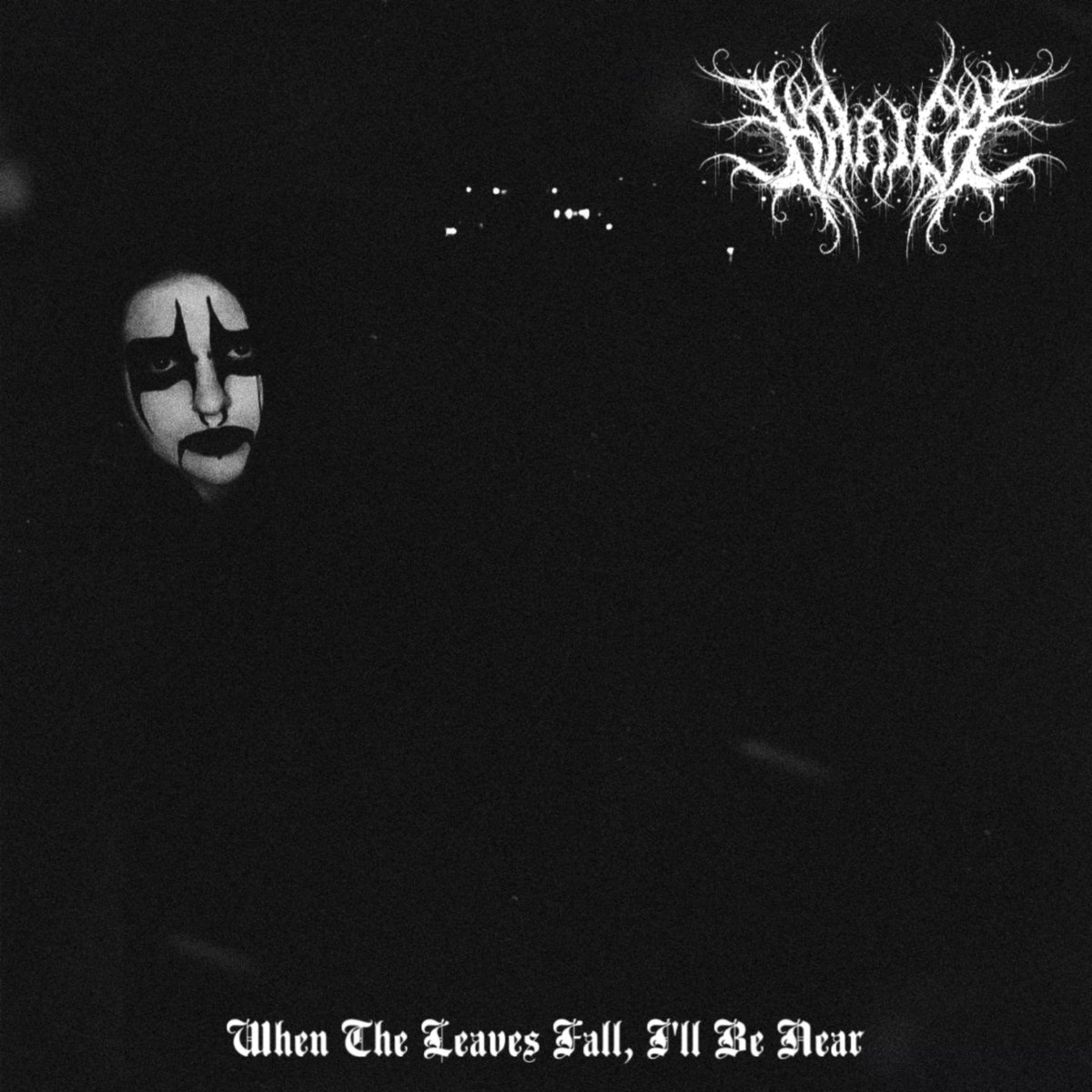
“When The Leaves Fall, I’ll Be Near” by Harifa almost convinces you it’s more substantial than it really is. On the surface, it checks all the right boxes: a blend of atmospheric black metal, DSBM, and blackgaze, and a clear emotional trajectory that leans into approbiate themes. Paired with a tight runtime, it feels intentional, controlled, and at least initially promising.
The opening stretch does a lot of the heavy lifting. There’s a genuine sense of contrast between the softer, almost wistful melodic passages and the harsher, more abrasive guitar work. Songs like “Autumn Leaves” and “Petrichor” establish that balance effectively, weaving in cleaner textures without completely sanding down the raw edge. It suggests an artist who understands how to construct atmosphere rather than just gesture toward it, which already puts the album a step above a lot of similar releases.
But that early promise doesn’t quite evolve. As the record moves forward, particularly into its heavier back half, it leans more into primitive black metal textures, but without a corresponding increase in emotional weight. The shift is there on paper, but it doesn’t feel true. Instead, it comes across as a variation on the same underlying idea, repeated with minor adjustments rather than meaningful development.
That’s where the album starts to flatten out. The songwriting is competent, even solid, but it rarely surprises. Transitions are smooth, arrangements are tidy, and everything flows exactly as you’d expect it to. There’s a professionalism to it that’s to respect, but it also creates a kind of predictability that dulls the impact.
The production reinforces this middle-ground feeling. It manages to keep the rawness intact while still allowing the melodic elements to come through clearly, which is no small feat. At the same time, it compresses the dynamic range just enough that nothing really hits. What ultimately holds the album back isn’t a lack of skill or vision, but a reluctance to push either far enough. The melancholic side never becomes devastating, and the aggressive side never becomes truly feral. Both are present, both are handled well, but neither leaves a lasting impression. It’s the sound of an artist circling something potent without quite committing to it.
That said, it’s far from a failure. The short runtime works in its favor, the cohesion is strong, and there are enough well-executed moments to justify returning to it. It’s easy to imagine this resonating more strongly with listeners who value mood and consistency over distinct highlights.